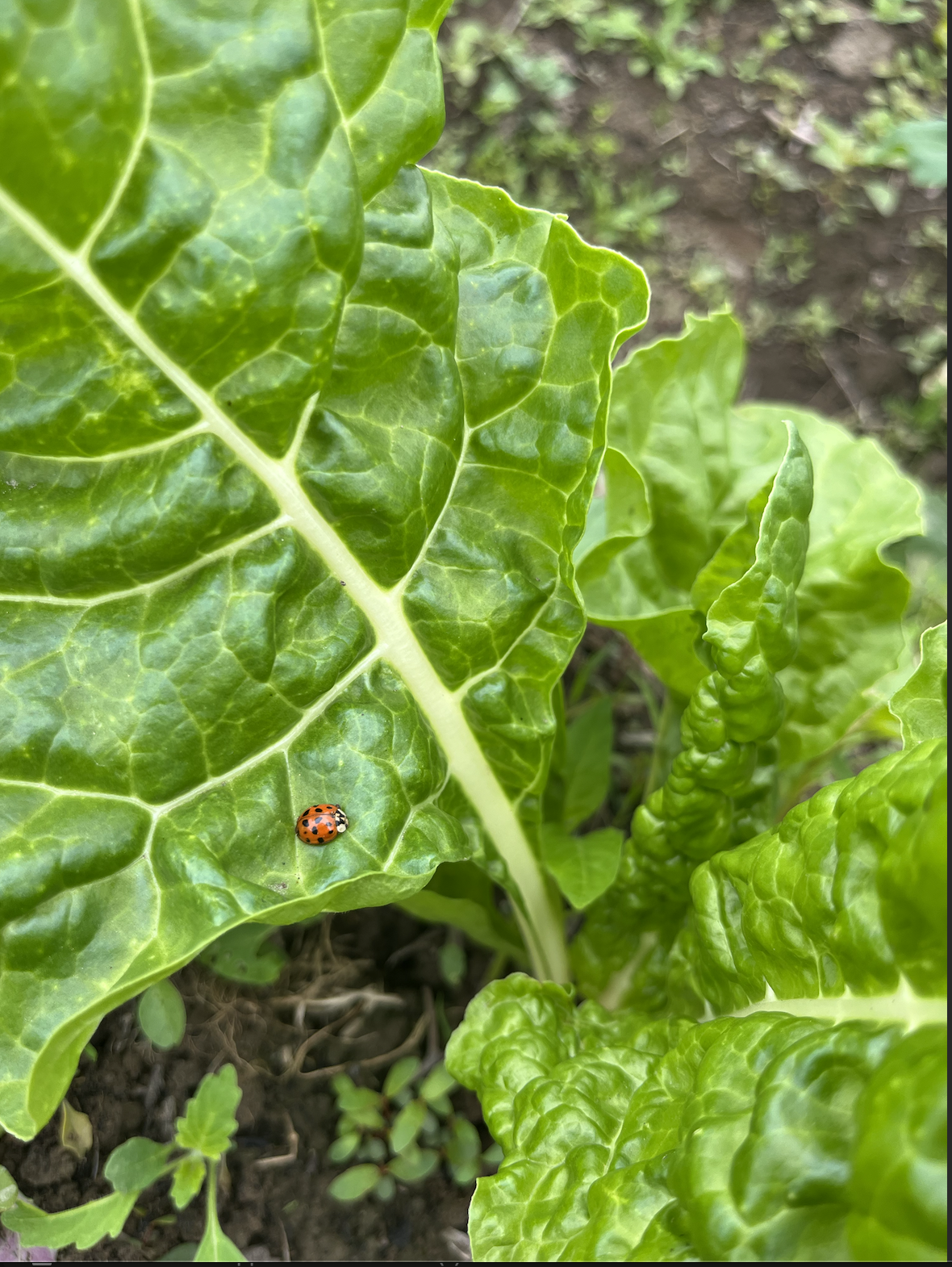
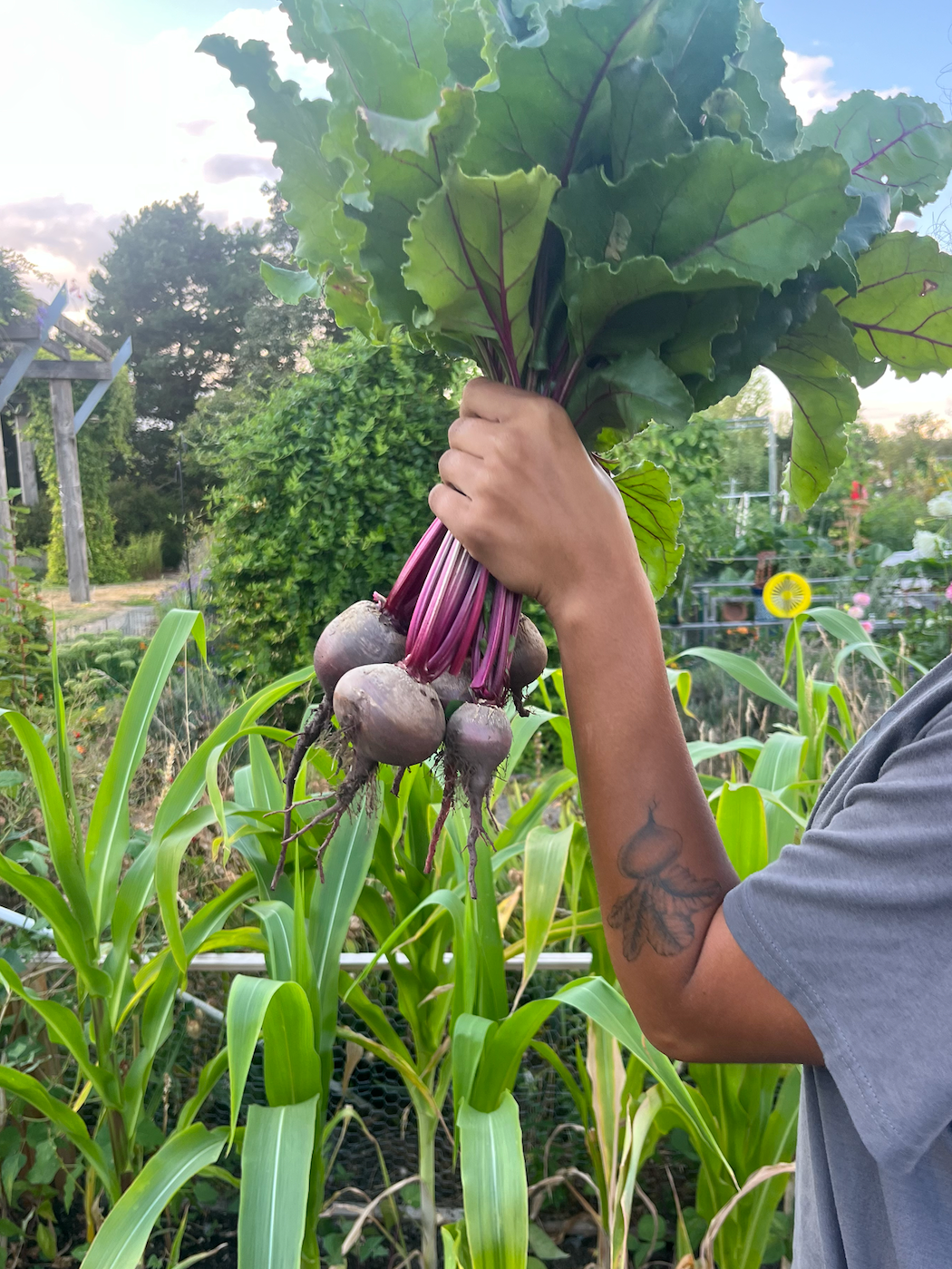
Earthworks Farm is committed to growing with Afro-Indigenous principles; principles that are inherently regenerative and organic in nature. We believe that sustainable agriculture isn’t something new, but rather something old. We draw particular inspiration from Afro-diasporic farming practices and knowledge, as well as those Indigenous to Turtle Island who gently stewarded this land for centuries.
Scroll down to learn more about our ecologically-driven practices on land!
Earthworks Farm is a practicing organic farm, meaning that while we are not organic certified, we employ the same practices as baseline principles on the land. We never use synthetic pesticides, herbicides, or fertilizers on the land or veggies.
Practicing organic
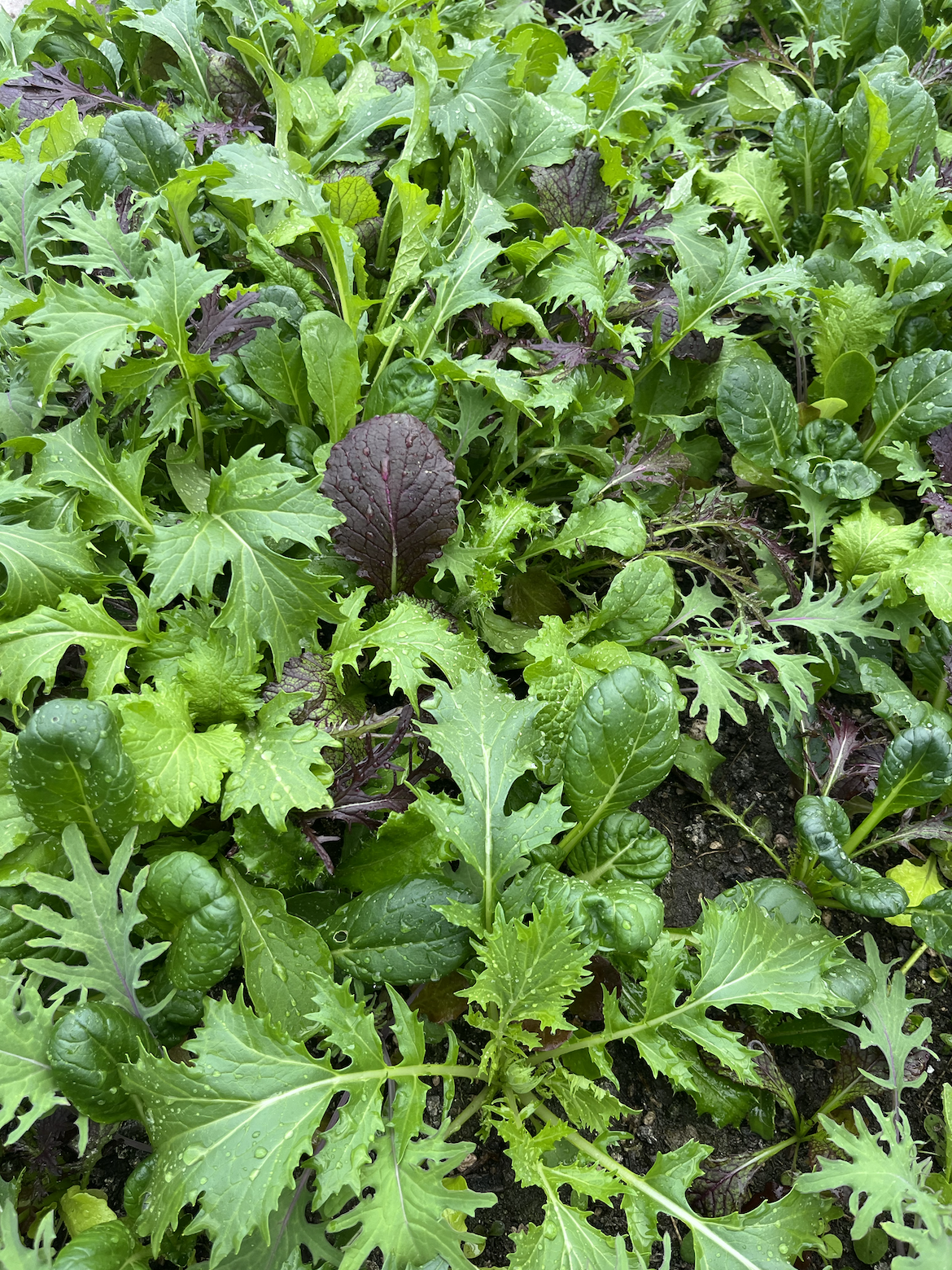
We plan to grow over 40 varieties of veggies, herbs, and flowers on our small but mighty 1/8-acre. This diversity promotes a balanced ecosystem and increases on-farm resilience.
Intercropping and crop rotation
We seek to gently integrate our farm into the local ecology, and choose crops and growing practices that support a thriving ecosystem. One way we plan to do this is by planting 2 pollinator patches to attract and support pollinators.
Pollinator patches
Our crop plan incorporates numerous examples of intercropping to pair up the intrinsic qualities of diverse crops for mutual benefit. For example, we’re incorporating the Haudenosaunee practice of “three sisters”, or growing corn, beans, and squash together in one bed. The corn provides a trellis for the beans, who fix nitrogen for the “heavy-feeder” corn. The squash provides ground cover for moisture retention and soil health.
Additionally, we will employ crop rotation each year to minimize pest problems and maintain soil health.
Poly-culture
Soil-centric
Soil is truly the life-force behind Earthworks Farm. With great reverence and respect for this incredible ecosystem, we will employ practices that are gentle and even regenerative for the soil. Some practices we’re planning for include: cover cropping/tarping over winter, minimizing tillage, incorporating compost and organic fertilizers on-farm, and more.
Semi-dry
We are fortunate to be growing in the Tuk Muk soils of the Sammamish river valley; soils that are naturally high in organic matter and extremely moist. We will be experimenting with semi-dry farming practices as a way to reduce our reliance on water resources, increase drought resistance of our crops, and build climate resiliency.